The Politics of the King’s Shepherd

Although the 23rd Psalm might be the most familiar of all, I believe that there are dimensions of its meaning that often go unnoticed. Over on Political Theology Today, I suggest that there is a political aspect to the message of the psalm that might have striking implications for contemporary societies.

And here we encounter another dimension of the psalm that is often neglected: this is a psalm attributed to the anointed leader of YHWH’s people. While we are (rightly) accustomed to singing or praying this psalm as a private expression of God’s goodness and our trust in him as individuals, there is a political dimension to it that should not be missed. The psalmist to whom the psalm is attributed is not a private individual, but the representative of his people, blessed with a kingdom by YHWH, yet assaulted by enemy forces seeking his destruction.

2 Chronicles 7:6 refers to David giving praise by the hand of the Levites, singing, as it were, the ‘King’s Song’.[5] In the Old Testament, the ruler of the people often led the nation in its worship on important occasions. In psalms associated with the king, the people are invited to join in the worship of the representative in whom they are summed up, to locate themselves within the life of their leader, and to find his experience resonating with their own.

The fact that the king, himself regarded as the shepherd of his people, would look to YHWH in his fraught military and political situation as a weak sheep looks to its shepherd is a striking image of dependency. Comparing this with our own political leaders, who typically project a public image of confident assurance in their own sufficiency before the struggles and dangers facing our nations, the contrast is noteworthy.

Read the whole post here.

Posted in Bible, Christian Experience, Guest Post, OT, Politics, Psalms, Theological | 2 Comments

Davenant Latin Institute

I have mentioned the great work of my friends at the Davenant Trust on my blog before. They have recently started a new venture that I am very excited to tell you all about. The Davenant Latin Institute has been set up to prepare students and teachers with the language skills to access the vast treasury of theological literature—particularly Reformation and post-Reformation literature—that exists in Latin. In addition to the ability to explore works familiar to us in translation in their original language, a great many works remain untranslated, only accessible to those with competency in theological Latin. Training a new generation of Protestant theologians in Latin will hopefully serve to inspire a return to our often neglected theological sources.

The program involves online courses at introductory and advanced levels, designed to equip any student who wishes to learn to read theological Latin with basic reading competency or, for the more advanced courses, with more developed skills. The institute is highly recommended by both Professor Torrance Kirby and Fred Sanders. Of the teachers of the program, I have been privileged to know Brad Littlejohn and Peter Escalante for a number of years. Both are gifted and generous scholars and, in addition to learning much from both of them, I have been deeply blessed by their friendship.

The deadlines for enrolment are June 5, 2015 for the Summer Intensive course and July 24, 2015 for the year-long courses. Places are limited.

Find out more here.

Posted in Church History, On the web | Leave a comment

Podcast: Christendom and the Privilege of the Church


Mere FidelityThe latest Mere Fidelity podcast has just gone online. This week Derek Rishmawy, Matt Lee Anderson, Andrew Wilson, and I discuss the question of whether the Church should enjoy cultural and political privilege. Take a listen and share your thoughts in the comments.

You can also follow the podcast on iTunes, or using this RSS feed.

We are also seeking to raise money to buy new microphones, to improve the sound quality of our podcasts. If you have appreciated our podcasts, please consider donating a small amount to this fund.

Posted in Culture, Podcasts, Politics, Society, The Church, Theological | 23 Comments

Understanding Nature

In the latest discussion over on Passing the Salt Shaker, I attempt to provide a brief introduction to the notion of nature as it functions within natural law thinking:

As human beings, we are person-bodies embedded in a larger natural world and moral order in which we participate. We have both forces at work within us that are greater than us and natural orientations towards expression of, participation in, and realization of realities that exceed ourselves. The natural order beckons to us from both within and without. Living according to natural law is more of an art than a matter of speculative science. It involves deepening our acquaintance with and honing the directivity of the natural order that is already incipient within and operative upon us, through the feedback loop of participation in and reception of a natural reality that exceeds us.

Read the whole thing here.

Posted in Creation, Ethics, Passing the Salt Shaker, Philosophy, Sex and Sexuality, Theological | 15 Comments

Open Mic Thread 26

Mic

The open mic thread is where you have the floor and can raise or discuss issues of your choice. There is no such thing as off-topic here. The comments of this thread are free for you to:

  • Discuss things that you have been reading/listening to/watching recently
  • Share interesting links
  • Share stimulating discussions in comment threads
  • Ask questions
  • Put forward a position for more general discussion
  • Tell us about yourself and your interests
  • Publicize your blog, book, conference, etc.
  • Draw our intention to worthy thinkers, charities, ministries, books, and events
  • Post reviews
  • Suggest topics for future posts
  • Use as a bulletin board
  • Etc.

Over to you!

Earlier open mic threads: 123456, 7, 8, 9, 10, 11, 12, 13, 14, 15, 16, 17, 18, 19,20,2122, 23, 24, 25.

Posted in Open Mic | 85 Comments

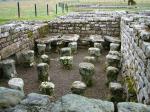
Northumberland and Durham

The following are some pictures from my last week in Northumberland and Durham. I love the north east of England! Click on any of the pictures to see them more closely or to scroll through them in order.

Posted in My Doings, Photos | 1 Comment

Podcast: The Resurrection and Christian Ethics


Mere FidelityThe latest Mere Fidelity podcast went online yesterday. Within it we discuss the significance that the resurrection has for Christian ethics, particularly focusing upon natural law. Take a listen and share your thoughts in the comments!

You can also follow the podcast on iTunes, or using this RSS feed.

Posted in Ethics, Podcasts, Theological | 2 Comments

Podcast: The Cross in the Gospels

Mere FidelityThis week’s Mere Fidelity podcast is on the subject of the cross in the gospel. Derek, Matt, Andrew, and I discuss the question of whether the gospels have a doctrine of the atonement and, if they do, what it looks like. Take a listen and share your thoughts in the comments!

You can also follow the podcast on iTunes, or using this RSS feed.

Posted in NT, NT Theology, Podcasts, The Atonement, The Gospels | 14 Comments

Why Do Men Fail To Trust Women?

My latest post on Passing the Salt Shaker went online earlier today. Within it I raise the question of why men so often fail to trust women, even when they are telling the truth, and especially in cases of abuse, suggesting several obstacles to trust.

In a recent article on the Huffington Post website, Damon Young asks why men don’t trust women. He argues that, even though we may trust women’s character, promises, and opinions on many matters, we don’t trust their feelings. When a woman comes to us annoyed about something, our instinctive assumption is that they are overreacting, even though we may go along with them. While this failure to trust women’s feelings is a problem, Young believes that it gives rise to far more serious issues. In particular, the belief that women characteristically overreact causes men to distrust their testimony on far more serious matters.

Read the whole thing here.

Posted in Culture, Ethics, Passing the Salt Shaker, Sex and Sexuality, Society | 43 Comments

How the Unmarried Can Reveal the Vocational Character of Marriage

I’ve posted over on the Passing the Salt Shaker blog again, this time on the way that the unmarried can help married persons to understand their vocation.

[T]he New Testament treats the unmarried state as one that Christians can purposefully pursue and one that is even preferable in certain instances, allowing one to devote oneself to the service of the kingdom of God in a fuller manner (e.g. Matthew 19:11-12; 1 Corinthians 7:6-9; 25-40). One of the things that this does is to disrupt the cultural script of marriage as a matter of course. Marriage ceases to be something that we just do because that is what everyone is expected to do and becomes something that we need to think about as a particular Christian vocation among other vocations.

Read the whole thing here.

Posted in Passing the Salt Shaker, Sex and Sexuality, Society, Theological | 1 Comment