My latest Davenant Institute video has just gone online. This time, Brad Belschner and I are discussing what ‘biblicism’ is and whether it is bad. Take a look!
My latest Davenant Institute video has just gone online. This time, Brad Belschner and I are discussing what ‘biblicism’ is and whether it is bad. Take a look!

In honour of the 500th anniversary of the Protestant Reformation, this week’s podcast was devoted to a discussion of its causes, its importance, and its legacy. For our discussion, the entire Mere Fidelity cast was joined by the wonderful Carl Trueman.
You can also follow the podcast on iTunes, or using this RSS feed. Listen to past episodes on Soundcloud and on this page on my blog.
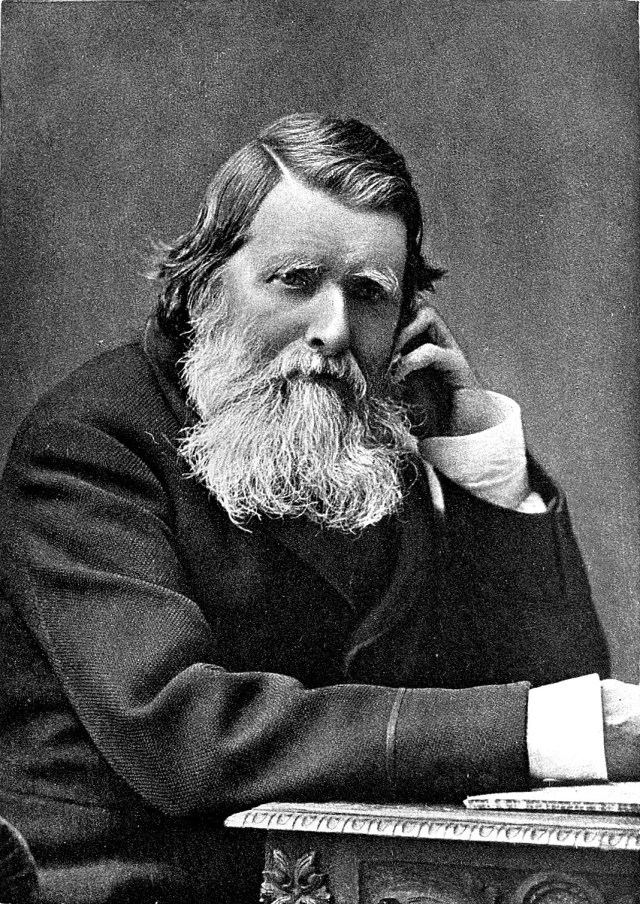
A post of mine on the subject of labour, money, and the question of value has just been posted over on The Kitchen Table. Within it, in conversation with Ruskin, Mill, and Marx, I discuss what value is and how our misperceptions of value radically and dangerously distort our society.
Our society is often described as a ‘materialistic’ society. However, we must recognize just how hostile our society is to matter in its notion of value, which both alienates value from matter and seeks to render all matter homogeneous and conformable to abstract value, power, and knowledge. Our society is built upon alienation, abstraction, and extraction from matter. We extract power, knowledge, and value from matter and abstract ourselves from its binding particularity. Matter is to be broken down and departicularized for the sake of our autonomous power. This is what defines reality for us today.
This hostility to the concreteness and particularity of matter isn’t just true in the case of money. It can also be seen in the way that we regard power as a homogeneous reality to be extracted and abstracted from the particularity of the material world. It can be seen in our modes of mass production and digital replication. It can be seen in our scientific posture towards reality that reduces reality to universal laws acting upon indistinguishable particles, purged of the particular or local meanings or qualities that render them salient to us. It can be seen in the way people are trained to be self-effaced, fungible, and optimized raw human material for labour. It can be seen in the way that the market steadily dissolves particularities of culture and persons to create homogenized markets. It can be seen in the way that the particularity of personal skill is replaced by universal abstract processes. It can be seen in the replacement of the deep wisdom that arises from lengthy enculturation with the study of detached technique.
Read the whole piece here.
I have hit the milestone of 1,000 answered questions on Curious Cat and have signed off answering questions on the site for the next few months. Thanks to everyone for their questions! Here is a list of some of the last batch of my responses:
What is the Bible FOR? … [Answer]
Were Job’s friends trying to kill him? [Answer]
Why do you think signs and wonders proliferated in the ministries of Elijah and Elisha, and in Daniel’s ministry? … [Answer]
Elisha curses young men and they get mauled by bears. What’s that all about? … [Answer]
I’m preaching on Luke 24:13-35.
I’m surprised how many commentators assume “our hearts burned” to mean “our hearts were warmed”, when the latter is a English idiom that may not be paralleled in the Greek and jesus’ teaching is framed by a strong rebuke. I am tending to think it means a more painful experience (like Psalm 39:4 and Jeremiah 20:9). What do you think?
While I’m here do you have any thoughts on the passage more generally? [Answer]
Some people argue that “love your neighbor as yourself” implies a command to love yourself before you’re capable of loving anyone else. Where do you stand on this? [Answer]
While I accept that God didn’t have plan A and then plan B after the Fall, I sometimes have difficulty articulating it simply, but fully…. [Answer]
Do you subscribe to the belief that there was a pre-creation covenant of redemption within the Trinity, either from a systematic or biblical theological position? … [Answer]
Is it okay to believe in God on purely non-theological or logical grounds? I think that God exists, but I couldn’t prove it to you and I find theological discussion tiresome. I just know. [Answer]
What is the relationship between law and new covenant? [Answer]
Why are evangelicals wary of strongly embracing typological readings of the Old Testament? [Answer]
A friend of mine recently told me that when missionaries he knows plant a church among a tribal group, they allow the new converts to decide what beverage they will use for Communion. The tribes do not have an existing culture of making wine, and what alcohol they do make is in some cases not safe to drink. So they use something like tea or Coca-Cola. Given the very compelling (to me) case you have made for wine to be used in Communion, I’m wondering what you think about this. Should the missionaries have found a way to import wine for them? [Answer]
James Jordan argues that the Christian tradition errs in treating the sacraments as visible signs, arguing that they should be understood instead as tactile or gustatory signs. There is some question regarding whether he accurately represents the tradition—”visible” is a metonymy for “sensible”—but setting that aside, is the use of “visible” as a metonymy misleading? … [Answer]
… I have grown up in the churches of Christ, which hold water baptism by immersion being one of the essentials to salvation, appealing often to Acts 2:38 as well as all examples of New Testament conversions containing reference to the immediacy of baptism upon a saving faith. I have struggled with understanding being saved by faith, while also tacking on baptism as essential. I have read a bit of tertullian, but wanted to get your thoughts as I respect you much. [Answer]
When explaining the objectivity of baptism from Romans 6, how do you explain the baptism into Christ of the unregenerate? Is Paul still talking about baptism in verse 5? [Answer]
What do you think is happening, both spiritually and psychologically, when mature, godly, well-informed Reformed evangelicals believe that they are engaging in and correctly interpreting actual glossolalia—assuming that in reality the actual gift has ceased? [Answer] [Follow-up]
When it comes to your view of prophecy and tongues and miracles, how would you understand a command such as “earnestly desire the spiritual gifts, especially that you may prophesy” (1 Cor 14)? … [Answer]
What do you think of contemporary worship music? [Answer]
Is episcopal government the best form of church government? [Answer]
What do you think are the main pitfalls your average contemporary Reformed person makes when teaching on the Reformation? [Answer]
Are Popish errors liable to set men up for damnation? … [Answer]
Should we pray for the demise of the Roman church? [Answer]
Was St Patrick a Protestant, as Ian Paisley said? [Answer]
Are Catholics Christians? … [Answer]
Do you have an opinion on the debate over ‘every member ministry’…? [Answer]
I find the invisible/visible church distinction unhelpful. Granted, I come from a Church of South India tradition greatly informed by Lesslie Newbigin’s views on the matter–that a divided church harms the witness of the Gospel, particularly where Christians are a minority. In The Household of God, he said that our acceptance of the divisions of the church is due to the fact that we do not believe that the church of God is what the New Testament taught that it was: the indivisible body of Christ. You seem more accepting of a type of invisible/visible church distinction. How would you respond to Newbigin’s view? [Answer]
How big should the ideal church be? Is there a size that is too big? Is there a size that is too small? … [Answer]
Can Amazonian tribesmen who have never heard of God go to heaven? … [Answer]
Cornelius needed the gospel because he lived during the time of its proclamation, but if a (hypothetical) pious Cornelius’ grandfather lived in 80 BC why wouldn’t his sincere fear of the god of the Israel, alms, and prayers to God been evidence of true faith as much as Jephthah’s or Lot’s? [Answer]
… How can one have a genuine Christian faith without a “personal relationship with Jesus Christ?” Can saving faith be had without it? [Answer]
I’m more curious what the Christian response should be when doubt and despair arise. [Answer]
Is slavery morally wrong? … [Answer]
Question about the moral duty of arming yourself to defend your family and for self-defense [Answer] [Follow-up]
Isaiah 1:17 says to correct oppression. How do you interpret that in light of police brutality in the U.S.? Should evangelicals be doing more? [Answer]
Do you think humour has a place in preaching? … [Answer]
An observation seeking observations. The Gospel Coalition has a short video about “Resisting the allure of gossip” The contributors are all women…. [Answer]
… You say husbands do not have to become “the head”, they just have to recognize their position and live according to it. I was left wondering how a man can, in practice, fail to do this. How would you answer this?
Moreover, wives are *commanded* to submit to their husbands, which seems to imply more of an active role in “becoming” submissive. What does it mean for a wife not to be submissive? [Answer]
… For me, the term “leader” is not well suited for describing the husband’s role in the one-flesh reality of marriage. Do you think the concept of the husband leading his wife is justifiable from this particular passage or the Scriptures in general? Do you have any hesitancy using the term “leader” to describe the husband’s role in relation to his wife? [Answer]
Regarding the Ephesians passage on submission in marriage, I have a friend who points out that the passage just prior calls for the members of the Church to submit to one another. My friend argues that this implies that the use of the same word (hypotasso in Greek) means that it can have no connotation of authority or obedience in the marriage context, as that would be absurd in the broader Church context.
How would you answer this claim? What is going on in this passage? Is there some notion of a wife obeying her husband in Biblical perspectives on marriage? [Answer]
You have said many times i think now that the man is the head of the wife by nature. Dose this headship extend beyond the family and if yes then how does one stop themselves from appearing condescending to all women they meet? If no then are you saying that the genesis passages are only speaking to men and women in their married state? Does the passage not have implications for how all men relate to all women? [Answer]
Should I continue having sex with my girlfriend, or tell her that we can’t as it is wrong in the eyes of God, even if I lose her? [Answer] [Follow-up]
I am infertile, or so I discovered a few years ago. Should I get married, even though I can’t have children? Was does scripture say about this? [Answer]
… When same-sex couples … have a child by artificial means, one of the pair … is the biological father of a child whose biological mother is not his wife. Although there is no physical intimacy when a child is conceived in this way, the child is the fruit of a union between the man’s sperm and the woman’s ovum, so do you that, in some way, such a union is adulterous? [Answer]
I just finished David Murrow’s Why Men Hate Going to Church. I think he’s right about the feminising atmosphere of many churches and the lack of active roles for men who aren’t more bookishly inclined. That said I think his focus on the more blue collar male is somewhat myopic and ignores that many men are inclined to be enjoy deeper theological teaching more than women. [Answer]
You argue against marriage between same sex couples and also gave reasons why women should not be pastors. Given the bibles understanding of marriage and the pastoral office would you say that marriage between same sex couples is not possible? And in the same way would you say that women cannot be pastors (in the narrower definition of ‘pastor’? Or is it more that women can be pastors, but there are good reasons for them not to be? [Answer]
You have written before on how you think Scripture limits the pastoral office to males. How then do we view women who are apparently serving as pastors? [Answer]
Is it good for Christians to feel revulsion toward homosexual practice? [Answer]
What do you think of Kevin Spacey’s implicit admission that there’s a link between homosexuality and pederasty? [Answer]
This is controversial, but what if telling people that unwanted sexual advances are traumatic makes the recipient resent it more as time goes by? I honestly think that people are more traumatised by child molestation now than they were 50 years ago. This isn’t because it’s not a horrible thing, but because the narrative of victimhood has overhwelmed discussions. [Answer] [Follow-up]
Someone recently said to me that the role of mother reflects God “at least as much as that of father”. Now, I’m aware of how motherhood is reflective of God, especially more so in the person and work of th Spirit, but the qualifier “at least as much as that of father” sits wrongly with me. How would you respond? [Answer]
Why are the Christians I meet so weak and feeble? … I find them to be ludicrously naive about human nature…. [Answer]
… How do you think those against abortion ought to frame the argument, if not in terms of personhood? [Answer]
What do you think about Christians who claim all Christians should be vegetarian, vegan, etc. because what we eat is a matter of justice and caring for God’s creation? Are there grounds for some Christians choosing these diets, even if not *every* Christian should? … [Answer]
Is being considerably overweight as a Christian a sin? [Answer]
Was the British Empire a good thing? [Answer]
Do you like Uber? Do you support it being banned in London? [Answer]
Should Britain leave the EU? [Answer]
Is Rod Dreher right in the Benedict Option? [Answer]
How should Christians react to people who are racists / anti-semitic? [Answer]
In your response to a question about Jared Taylor you described him as a racialist. In other contexts you have used racism and also racism/racialism. Do you intend to make a distinction between the terms and if so how would you distinguish them? [Answer]
What do you think about evangelicals supporting #BlackLivesMatter? Would you encourage it or discourage it? Why or why not? … [Answer]
What do you think of Martin Luther King, Jr? Should Christians celebrate his life? [Answer]
What do you think of Hauerwas’ theology? I see you mentioned him positively a few answers ago. [Answer]
Do you have any thoughts on Baudrillard’s Simulacra and Simulation? [Answer]
… If you regularly find yourself in the position of theological outlier, is that a cause for concern? [Answer]
If there were five books you could make everybody read (besides the Bible), what would they be? [Answer]
What do you recommend as the best way to become familiar with O’Donovan’s work? Is there a particular order to start in? Or are there any lectures he gives that are good introductions to larger themes? [Answer]
Do you recommend aspiring pastors read classic novels, or concentrate on theology? [Answer]
Do you have or recommend a Bible reading plan? [Answer]
Would you rather: only be able to listen to Test Match Special on 5 Live for the rest of your life (and never watch cricket on TV) OR only be able to watch cricket on TV (and never be able to listen to TMS)? [Answer] [Follow-up question in response to which I discuss some of the appeal of aristocracy over meritocracy]
A job you enjoy but don’t pay you much vs a job you can (joyless) do but gives you financial comfort. Which one to pick? [Answer]
Do you mind being trolled? [Answer] [Follow-up] [More] [More]
Do you think in different circumstances, you might have identified as Irish rather than English? [Answer]
That’s all for the next few months! Thanks to everyone who sent in questions. There are about 700 unanswered questions in my inbox. I am sorry if yours was one of them.
Welcome to the latest episode of our study through Augustine’s Confessions. This week we get into the third book, discussing matters such as Augustine’s critique of the theatre.
You can also follow the podcast on iTunes, or using this RSS feed. Listen to past episodes on Soundcloud and on this page on my blog.
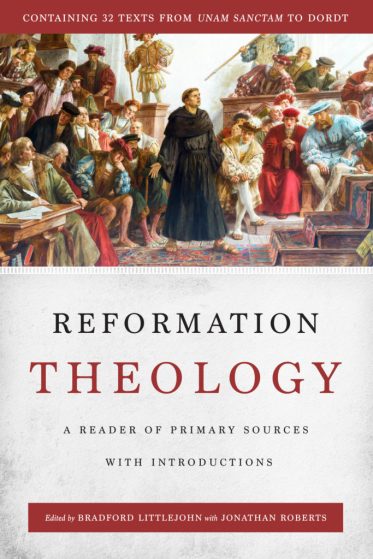
Happy Reformation Day, everyone!
On this five hundredth anniversary of Martin Luther’s posting of his Ninety-five Theses, I am excited to share the news of a new book of Reformation readings that has just been released by the good folks at the Davenant Institute. With 754 pages and over thirty important historic texts with introductory material, it will orient you to the events and the teachings of the Reformers and help to explain why, five hundred years later, we are still celebrating the Reformation’s occurrence.
I’ve already ordered my copy! Get one for yourself from the Davenant Institute site, or from Amazon.
Continuing from my previous two videos, I have another Davenant Discussion video in which I give some brief thoughts on the subject of headship in conversation with Brad Belschner. Visit the Davenant Institute’s site to find out more about their work, to watch more videos like this, and to discover many further resources.
Here are some of the most recent answers on my Curious Cat page. I plan to take a break for a few months after I reach 1,000 (I’m currently on 833 questions answered), so get any burning questions you have in now!
Why is faith a necessary condition for salvation? [Answer]
Should Christians expect their life to be directed by an inner, subjective leading of the Holy Spirit? To many Christians I know (non-charismatic evangelicals) this seems to be the very essence of the Christian life. They have little interest in agruments about theology or biblical interpretation because they believe the real thing is discerning the will of the Spirit. [Answer]
Is the default mode for mankind hell? [Answer]
What is your view on the fate of the unevangelized? [Answer]
When I read the book of Acts, it seems that there was no waiting period between belief and baptism, but that those who believed were baptized right away. Do you think this should be the church’s practice today, or is some sort of waiting and teaching period to be preferred (whether catechumenate, baptism classes, membership classes, etc.)? [Answer]
Is the gift of tongues the initial evidence of an individual’s baptism of the Holy Spirit? If not, why does Peter link the gift of tongues and the reception of the Holy Spirit in Acts 10:44-48? [Answer]
What do you make of the lack of commands in the NT epistles to evangelize? … [Answer]
Question indirectly relating to the interpretation of Galatians 3:28 [Answer]
Should 2 Timothy 3:16 be seen as alluding to Gen 2:7? If so, what does this mean for our doctrine of inspiration? [Answer]
Did God predestinate the crucifixion of Jesus? [Answer]
… What explains most Christians rejecting the notion of God willing everything, despite it coming up everywhere in the Bible? [Answer]
In some of your answers you uphold a standard reformed doctrine (e.g. personal election) but reject the traditional reading of major passages used to support that doctrine. Is it surprising to you that you would find yourself in the same place via an alternate route? Do you ever worry that your commitment to received doctrine prevents you from “following the evidence where it leads?” [Answer]
The Bible advises us against contracting debt, but we don’t think too much about it when our debt is small and manageable.
Should Christians take loans to buy a house? [Answer]
What are your thoughts on the doctrine of inerrancy? Would you, for example, subscribe to the Chicago Statement on Inerrancy? [Answer] [Follow-up]
Should Protestant laypeople read the Apocrypha? Should it be printed in our Bibles and read in church? [Answer]
Is some sort of trust in the authority of the Church required to accept the canon? [Answer]
My sister and her husband recently had a baby and I’ve had the honor and responsibility of being named the godfather. I’m not a parent, so I have never had a major responsibility for anyone’s growth in the faith before. I’m curious if you have any thoughts on how best to carry this out in a society that’s becoming increasingly antagonistic to the faith. [Answer]
Why do Roman Catholics have a problem with paedophilia? … [Answer]
Why do most churches never send people knocking on doors? … [Answer]
Does church architecture matter? Should we think of church buildings as holy spaces? [Answer]
Is it sinful for churches to be so richly and expensively designed like Vatican churches? [Answer] [Follow-up]
How can an evangelical learn to produce works of art (music, film, painting, sculpture, etc.) to the glory of God? What historical models of evangelical artistry can he look to? Is there/should there be a rich tradition of art in evangelicalism? Or can that only be found in Roman/Eastern Orthodox history? [Answer]
… [D]o you consider yourself primarily Evangelical, rather than, say, primarily a Reformed Anglican, and if so, why? Second, what about Evangelicalism in its contemporary form is worth preserving? [Answer]
What do you make of the below Gospel Coalition article, particularly in relation to your general thoughts about evangelicalism? [Answer]
What makes someone ‘Christian’, and are you a fan of labelling people ‘not Christian’ when they espouse weird beliefs and behaviours (e.g. Joel Osteen)? Do you have to believe in the Trinity to be Christian? Are Unitarians called Christian? [Answer]
I’ve heard Roman Catholics accuse Protestants of limited models of spirituality for women, and a low view of women in general, owing to their lack of veneration for Mary. Do you think this connection is plausible? Have Protestants neglected Mary? [Answer]
The perpetual virginity of Mary was upheld by a number of the reformers and even made it into the Second Helvetic Confession, but today it is pretty much unheard-of among Protestants. Do you think this doctrine is worth retrieving, or was it just a leftover bit of Roman corruption that got purged out later? [Answer]
Does the disappearance of Joseph from the biblical narrative and Jesus commending his mother to the care of John provide evidence that the brothers and sisters of Jesus mentioned elsewhere might be from a previous marriage of Joseph and that the argument against the perpetual virginity of Mary from the references to Jesus’s brothers and sisters has less force? [Answer]
Do you think it’s possible one reason the perpetual virginity seems so implausible to most Protestants (myself included) is that we’ve lost hermeneutical practices of Scriptural interpretation which make such claims more plausible? I’m thinking in particular, for example, of the fourfold method and allegorical interpretation in particular, which some used to support, e.g., reading a certain prophetic text about “closed gates” as referring to Mary. [Answer]
I just watched your Davenant video on masculinity. What is going on when Paul exhorts the Corinthian Christians to “act like men” without elaboration? [Answer]
What does it mean for a man to “crumple” in a conflict? Does it include going into shock and bring unable to function and living with PTSD for the rest of one’s life? [Answer]
… What do you think it means, from a biblical perspective, for a female to be beautiful and to pursue beauty in a godly way? … [Answer]
… Is there any evidence show that girls have an innate desire for intimacy, and that the best way to nurture healthy females is for family and society to help them from stable, loving and long-term relationships? [Answer]
… Do you know of other articles, or have other thoughts, on things we could say to express our wish to not be “priced out” of marriage? [Answer]
If marriages are consummated in the sexual act, what does that mean for marriages in which one or both spouses are unable to have sex (e.g. cases of severe disability etc)? [Answer]
In light of Ephesians 5, in what ways is it legitimate to speak of the purpose of marriage as being to display the gospel to the world? … [Answer]
Does every man in power over young women and up sampling the goods? [Answer]
Have you addressed the “Men’s Rights Movement” anywhere? … [Answer]
A dumb teenager might steal from his parents regularly, stalk a girl because she’s cute and he hope he’ll like her (he’s dumb, remember), or cheat on his math homework.
Why is the second one the one of great social and cultural import? Are there hard boundaries or criteria that make the sexist actions of the teen boy a social problem, but not the stealing? [Answer]
Any thoughts on social media’s “me too?” Why does it seem like “men are default assholes” is often a part of the message? [Answer]
What do you think of these words on the passive voice used in society about women? [Answer]
What do you think about women serving in the military? [Answer]
I wondered whether you’d read Michael Hannon’s argument that heterosexuality (that is orientationism) first appeared in the 19th century and that it is inimical to traditional natural law teachings on sexual relations. … [Answer] [Follow-up]
I have read about the importance of not hanging my head in defeat, assuming the inevitable moral slide of society away from its God-ordained order. However, it is hard to not feel defeated. As a Christian, how can I/we helpfully engage with this sort of issue in a public sense and when is it worth or not worth putting in the effort? [Answer]
Would you preach against IVF from the pulpit? If so, what would you do about feedback like, “We used IVF to conceive, does that mean we’re bad Christians?” or, “I was conceived through IVF, does that mean I’m a lesser human being?” [Answer] [Follow-up] [Further question from woman pursuing IVF treatment]
I’d also like to ask if you see any meaningful difference between couples who use their own biological material vs donor material. [Answer]
You mentioned that you wouldn’t preach against IVF in the pulpit and you’d stay as close to the text as possible however what length of deductions from the text in your view would be licit in a sermon? … [Answer]
On the subject of infertility, IVF, etc., would you advice a married couple that such circumstances might be understood as a providential signal to pursue adoption as a healthier and morally clearer alternative to reproductive technologies? … [Answer]
Is it an ethical decision for an unmarried Christian to adopt a child? [Answer]
Do you have any thoughts on the recent argument made on abortion by Patrick Tomlinson? [Answer]
Do you think governments and other institutions should take steps to encourage fecundity? Are steps such as increasing maternal leave, which may increase the birth rate but simultaneously militate against the ordering of women toward the home and their children unwise? [Answer] [Follow-up]
How do you give appropriate value to experts even while recognizing the inescapable reality that on a daily basis we disagree with experts all the time in ways we could not defend in a formal debate? … [Answer]
… I was hoping for your thoughts on the relationship between human flourishing and work, and the modern office environment? … [Answer]
If lab-grown meat became as delicious, burritos [sic.!], and cheap (out moreso) as actual animal meat, would eating actual animal meat be less just than eating lab-grown? [Answer]
You mentioned in the natural law question how technology makes suppression of natural law more possible. Could you give an example? … [Answer]
… [W]hat would be the circumstances at younger ages (pre school/primary school) which would make you consider homeschooling? What can be the problems/issues that can arise where parents decide to homeschool young children? [Answer] [Follow-up]
… Do you think the current school environment is conducive for developing independent agency? Secondly, if it does only in a limited way how would you approach fitting this time in along with a healthy amount of time spent with family? [Answer]
… [D]o you think that given the present circumstances in the UK that it is prudent that education is in general decondensed? [Answer]
How should a Christian view the corporal punishment of children from a biblical perspective? … [Answer]
Which criteria should we use to name a child? … [Answer]
… Should Christians be concerned about ecosystem function as a good unto itself, or only as it provides tangible goods to people (clean air and water, food, etc.)? … [Answer]
Is “white privilege” a valid and helpful term/concept? How should white
Christians approach it, particularly in a U.S. setting? [Answer]
Was Martin Luther King Jr. justified in using his position as a Christian minister to advocate primarily for civil rights over the course of his life? … [Answer]
How should Christians react to Alt-right claims about intelligence differences? … [Answer]
How do you select the questions that you answer? [Answer]
What was your doctoral dissertation on? [Answer]
How and when did you realize you have became an adult? … [Answer]
… In the case of family members or friends (basically not Twitter bots I can mute) who, due to the news circles they frequent, perpetuate apparent falsehoods (some in the category of conspiracy theory), what are helpful principles in terms of responding truthfully and graciously and even, hopefully, curbing some of these misinformation?… [Answer]
What are your thoughts on critical theory? [Answer]
What was your reaction when you found out Trump won the presidency? Did you find out just as you woke up in the morning? Happy or shocked? [Answer]
Have you listened to George W. Bush’s recent speech on freedom and its current threats? Do you have any thoughts on it? [Answer]
… I think the notion that products of the West are from the West solely because the West industrialized first is particularly ignorant of the important social and cultural assumptions that were somewhat novel in the West and that differentiated it notably. [Answer]
Two questions, perhaps related:
1) What are your thoughts on underlining/notating in Bibles?
2) What do you think about purchasing high-quality, leather-bound Bibles (e.g. from R. L. Allan)? [Answer]
Leave any questions you might have here. This week will probably be your last opportunity for a few months!
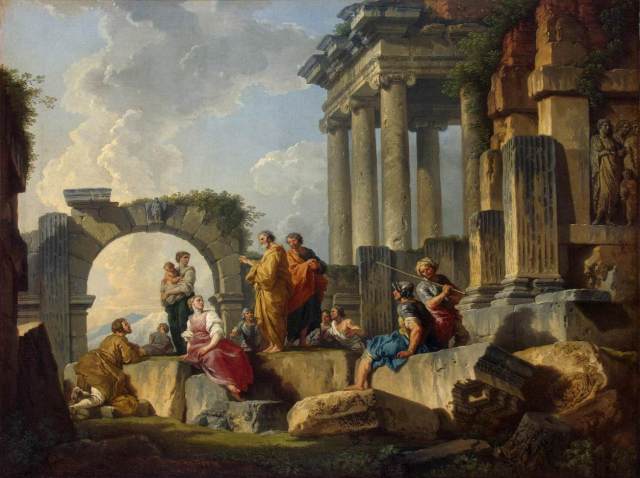
I’ve just posted a reflection on 1 Thessalonians 2:1-8 over on Political Theology Today.
Paul’s representation of his ministry in these opening chapters of Thessalonians dramatically challenges many of the assumptions that we bring to acts of communication. While our understanding of communication is commonly shaped by a series of oppositions between sender and message, sender and messenger, messenger and message, message and recipient, and messenger and recipient, Paul systematically unworks each of these in relation to the gospel message.
Drawing the minds of the Thessalonian Christians back to the founding events of their church, Paul speaks of the gospel as God’s self-communication by the Holy Spirit, of God working through and in his messengers, of the emissary of the gospel as one borne along by the message he bears, of the message as something that is powerfully at work in its recipients, and of the recipients as children of the message, begotten and nourished by the messenger. At each point, Paul reveals that the oppositions that can serve as occasions for deceit, perverse motives, and distrust are destabilized by the very character of the gospel.
Read the whole thing here.
Read past posts of mine in the Politics of Scripture series and on other websites here.
We started reading through Augustine’s Confessions together a few weeks ago. This week we discuss the second book, especially Augustine’s discussion of his theft from the pear tree.
You can also follow the podcast on iTunes, or using this RSS feed. Listen to past episodes on Soundcloud and on this page on my blog.

n. pl.
A miscellaneous collection of notes, remarks, or selections.