Žižek on the Meta-Choice of Western Multiculturalism

In the course of commenting on Archbishop Rowan Williams’ position on sharia law in the UK in his latest book, Living in the End Times, Slavoj Žižek remarks:

[T]he moment a woman wears a veil as the result of her free individual choice, the meaning of her act changes completely: it is no longer a sign of her direct substantial belongingness to the Muslim community, but an expression of her idiosyncratic individuality, of her spiritual quest and her protest against the vulgarity of the commodification of sexuality, or else a political gesture of protest against the West. A choice is always a meta-choice, a choice of the modality of the choice itself: it is one thing to wear a veil because of one’s immediate immersion in a tradition; it is quite another to refuse to wear a veil; and yet another to wear one not out of a sense of belonging, but as an ethico-political choice. This is why, in our secular societies based on “choice,” people who maintain a substantial religious belonging are in a subordinate position: even if they are allowed to practice their beliefs, these beliefs are “tolerated” as their idiosyncratic personal choice or opinion; the moment they present them publicly as what they really are for them, they are accused of “fundamentalism.” What this means is that the “subject of free choice” (in the Western “tolerant” multicultural sense) can only emerge as the result of an extremely violent process of being torn away from one’s particular lifeworld, of being cut off from one’s roots.

A few questions.

What does ‘culture’ mean in a society that so powerfully valorizes choice per se? If the existence of culture depends upon a fixity of choice, a durability achieved through renunciation and prohibition (can there be a culture without ‘thou shalt nots’?), what remains of culture when society’s shape is determined not be the preservation of memory through the fixing of desire upon common objects of love guarded by interdiction, but by the whims of consumers in the market, the fickleness of mimetic desire, and the dictates of market trends? Does such a society become an amorphous anti-culture (or post-culture?), little more than an agglomeration of swirling patterns of lifestyle consumer choices?

If choice is only permitted under the modality of the meta-choice that affirms and remains subject to a fundamental and primal voluntarism, entailing a rejection of any truly cultural Choice that represents a commitment to a substantial good that claims to trump voluntarism (and thus re-introduce the interdiction that is almost invariably entailed by a social commitment to a form of freedom inseparable from particular ‘goods’, rather than ‘choice’ as such), what becomes of identity?

How does all of this relate to the Christian doctrine of baptism? If, on the one hand, as writers like Peter Leithart and Oliver O’Donovan have observed, infant baptism represents the rejection of the tyranny of modern voluntarism by asserting a Choice that precedes and grounds and defines our choice (our choice ceases to be the ex nihilo self-creating word, but our chosen answer to Another’s prior Choice), baptism has also been clearly associated with the creation of the universal human, ‘unplugged’ from particular social substance, and granted a new choice and freedom with regard to his own being (a theme present in certain Early Church fathers, for instance). How do we maintain both sides of this picture, and yet still maintain the contrast with the voluntaristic ‘freedom’ of the postmodern subject? How do we both resist the reduction of Christianity to merely a given cultural identity among others, or yet another religious lifestyle choice in the postmodern marketplace?

Posted in My Reading, Quotations | 5 Comments

Jeremy Begbie on Theology Through the Arts

Via Daniel Stoddart. Well worth watching. I have long been a fan of Jeremy Begbie. During my time in St Andrews he delivered one of the best sermons I have ever heard at St Salvator’s Chapel. I highly commend his work to you if you are not already familiar with it.

Posted in Theological, Video | 1 Comment

The Importance of Forgetting

I posted last night on the subject of forgetting what we read. Having promised a friend that I would post a follow-up quotation on the subject of forgetting, here goes.

Somewhat ironically, it took me a while to find this quotation, as I couldn’t remember where I had come across it…

Dave Shenk asks why something as sophisticated as the human brain would develop with ‘an apparent built-in fuzziness, a tendency to regularly forget, repress and distort information and experience.’ He argues that, far from being a deficiency, this represents a crucial and invaluable feature of our mental processing: ‘Forgetting is not a failure at all, but an active metabolic process, a flushing out of data in the pursuit of knowledge and meaning.’

To elaborate on the point, Shenk refers to the famous Russian psychologist A.R. Luria, whose case-study with S., a newspaper reporter from Moscow with perfect memory, who forgot virtually nothing that he heard or saw, reveals how this supposed ideal may prove far from desirable. S. had an astounding capacity to remember details, a capacity with no clear limits. He could exhibit faultless recall of pages of random data, and recite them from memory in various orders, even many years after first seeing them.

However, S. ‘was plagued by an inability to make meaning out of what he saw.’ Presented with an obviously ordered and meaningful selection of data, he was incapable of discerning the principle of order. He couldn’t make sense of prose and poetry and struggled to remember people’s faces, as they were constantly changing.

Luria also noted that S. came across as generally disorganised, dull-witted and without much of a sense of purpose or direction in life. This astounding man, then, was not so much gifted with the ability to remember everything as he was cursed with the inability to forget detail and form more general impressions. He recorded only information, and was bereft of the essential ability to draw meaning out of events….

What makes details hazy also enables us to prioritise information, recognise and retain patterns. The brain eliminates trees in order to make sense of, and remember, the forests. Forgetting is a hidden virtue. Forgetting is what makes us so smart.

I believe that this also has relevance to our modern obsession with the production and consumption of data (of which more this evening), an obsession that can impair our capacity to discern meaning and render us intellectually sluggish as a society. Much as the individual brain, a society fixated on data and its retention loses its capacity to perceive meaning and experiences a wasting of its spirit. A society that wishes to retain a clear sense of meaning and purposes needs robust data flushing processes, much like a metropolis needs a sewage system.

Posted in My Reading | Leave a comment

Eating and the Perfection of Our Nature

Another old post.

Bear in mind that you should conduct yourself in life as at a feast. – Epictetus (55AD-135AD)

We are not infrequently reminded of the reality of our animal nature, of how much we share in common with the rest of the animal kingdom. Like all other creatures we eat, sleep, defecate, and have sex. Within this stress on commonality, however, it is easy to forget just how dissimilar we are from the animals in the way that we negotiate our ‘animal nature’. In fact, paying attention to the manner in which we perform our most animalistic of actions is one of the best ways to arrive at insights into human nature.

For instance, on the matter of defecation, Slavoj Žižek – who rather likes dealing with the scatological – observes:

[T]he immediate appearance of the Inner is formless shit. The small child who gives his shit as a present is in a way giving the immediate equivalent of his Inner Self. Freud’s well-known identification of excrement as the primordial form of gift, of an innermost object that the small child gives to its parents, is thus not as naive as it may appear: the often-overlooked point is that this piece of myself offered to the Other radically oscillates between the Sublime and – not the Ridiculous, but, precisely – the excremental. This is the reason why, for Lacan, one of the features which distinguishes man from animals is that, with humans, the disposal of shit becomes a problem: not because it has a bad smell, but because it came out from our innermost selves. We are ashamed of shit because, in it, we expose/externalize our innermost intimacy. Animals do not have a problem with it because they do not have an “interior” like humans.

Žižek and numerous other philosophers have made similar points about human sexuality, which is shot through with the distinctness of human personhood. Even our most ‘animal’ of sexual urges are thoroughly human, to the extent that no animal could attain to them. Lacking the self-reflexivity of selfhood that human beings enjoy, animals do not experience the sexual desire, arousal, and fulfillment that human being can. On account of human personhood the body functions quite differently for us as it does for animals. As Roger Scruton remarks, ‘Although I am identical with my body, my experience of embodiment must be sharply distinguished from my experience of the body.’ For human beings sexual intercourse is an interpersonal act, which is one of the main reasons why paedophilia is such a serious perversion, as the child has not yet attained to the level of self-knowledge and intentionality necessary to engage in the human act of sexual intercourse.

One of the most interesting ways in which we differ from the animals, however, is to be found in the way that we eat. There are a number of ways in which we can approach this subject. One good starting point is with the work of Richard Wrangham, which argues that it was cooking rather than hunting and meat-eating that served to set us apart from the primates. In Catching Fire: How Cooking Made Us Human, Wrangham claims that human beings ‘are adapted to eating cooked food in the same essential way as cows are adapted to eating grass, or fleas to sucking blood.’

We can get away with our tiny mouths because, unlike apes, we do not have to spend six hours a day chewing. Our teeth are not made for ripping antelope flesh. We are built to eat food softened by fire, which can be bolted down relatively quickly, leaving us to get on with other activities. “Humans do not eat cooked food because we have the right kind of teeth and guts; rather, we have small teeth and short guts as a result of adapting to a cooked diet.” The single most important fact in the transition from ape to human being was not the meat-eating habit but the discovery of fire. The fact that we are cooks is more important than the fact that we are carnivores.

The practice of cooking and preparing food has acted as a profound culture-shaping activity, affecting the relationships between the sexes (often leading to women being trapped in a subservient role, while freeing up the time of the males), forming larger networks of cooperation and the division of labour (just think of the broader culture that needs to be present to make a loaf of bread), and prompting us to think of our relationship to the world differently, as those who transform, rather than merely appropriate the resources of nature.

The differences between men and animals do not end with the cooking of food. Leon Kass, in a wonderful work, The Hungry Soul: Eating and the Perfecting of Our Nature, draws attention to several of these. As in the case of all other animals, hunger drives us out into the world to acquire material for nourishment, in order to preserve our forms and identities. The satisfaction of hunger involves partaking in various forms of engagement with our world, from seeing and hearing, to pursuing, attacking, cutting, preparing, cooking, biting, tasting, chewing, and swallowing. As higher animals our hunger for biological sustenance is intertwined with all sorts of further desires. Kass writes:

With the rise of intelligence and especially with its extraordinary development in the upright animal, the hungry soul seeks satisfaction in activities animated also by wonder, ambition, curiosity, and awe. We human beings delight in beauty and order, act and action, sociability and friendship, insight and understanding, song and worship. And, as self-conscious beings, we especially crave self-understanding and knowledge of our place in the larger whole.

All these appetites of the hungry soul can in fact be partly satisfied at the table, provided that we approach it in the proper spirit. The meal taken at table is the cultural form that enables us to respond simultaneously to all the natural features of our world: inner need, natural plenitude, freedom and reason, human community, and the mysterious source of it all. In humanized eating, we can nourish our souls even while we feed our bodies.

In many respects, one could argue that the meal table is the birthplace of culture. It is the place where the primary lessons of politeness are learned. Table manners help to form our understanding of selfhood, of culture, human fellowship, the art of conversation, and social etiquette. Norbert Elias’ observations on table manners in the Middle Ages are an interesting example of this:

People who ate together in the way customary in the Middle Ages, taking meat with their fingers from the same dish, wine from the same goblet, soup from the same pot or the same plate…– such people stood in a different relationship to one another than we do. And this involves not only the level of clear, rational consciousness; their emotional life also had a different structure and character. Their affects were conditioned to forms of relationship and conduct which, by today’s standard of conditioning, are embarrassing or at least unattractive. What was lacking in this courtois world, or at least had not been developed to the same degree, was the invisible wall of affects which seems now to rise between one human body and another, repelling and separating, the wall which is often perceptible today at the mere approach of something that has been in contact with the mouth or hands of somebody else, and which manifests itself as embarrassment at the mere sight of many bodily functions of others, and often at their mere mention, or as a feeling of shame when one’s own functions are exposed to the gaze of others, and by no means only then.

Eating together is a practice through which some of humanity’s noblest virtues can be formed and honed. Kass writes:

For those who understand both the meaning of eating and their own hungry soul, necessity becomes the mother of the specifically human virtues: freedom, sympathy, moderation, beautification, taste, liberality, tact, grace, wit, gratitude, and, finally, reverence.

One of the deepest malaises of contemporary culture is seen in the manner in which materialistic outlooks on life discourage us from truly humanizing our most animal of actions. In the process the heights of human nature are no longer striven for and we are brutalized in certain respects. For instance, a loss of modesty and of the sense of the obscene goes with a loss of the human sense of interiority. Perhaps this danger of forfeiting the riches of human nature is especially present in the case of eating.

The Russian Orthodox writer on liturgy, Alexander Schmemann makes the startling claim that in his assertion that ‘man is what he eats’ the materialistic philosopher Ludwig Feuerbach was unknowingly expressing ‘the most religious idea of man.’ Materialistic perspectives on the world, just as idealistic perspectives before them, sunder the ‘spiritual’ and the ‘material’, man’s ‘soul’ from his ‘body’. Attending to the humanized act of eating, however, is profoundly illuminating, puncturing the idea that there is any division between the soul and the body.

Man has a hunger for life. However, this hunger for life is an undifferentiated hunger, knowing no clear separation between spiritual and physical dimensions. Practicing a proper approach to the meal table is a way of nourishing life on all levels. Once this integrated approach to the satisfaction of the human hunger for life is abandoned, though, and hunger is met with nothing but biological sustenance, our souls emaciate. Knowing of no other way to address our deeper hunger, we can have an ever more fraught relationship with biological food – gorging, wolfing, purging, starving.

Leon Kass writes again:

We face serious dangers from our increasingly utilitarian, functional, or “economic” attitudes toward food. True, fast food, TV dinners, and eating on the run save time, meet our need for “fuel,” and provide close to instant gratification. But for these very reasons, they diminish opportunities for conversation, communion, and aesthetic discernment; they thus shortchange the other hungers of the soul. Disposable utensils and paper plates save labor at the price of refinement, and also symbolically deny memory and permanence their rightful places at the table. Meals eaten before the television set turn eating into feeding. Wolfing down food dishonors both the human effort to prepare it and the lives of those plants and animals sacrificed on our behalf. Not surprisingly, incivility, insensitivity, and ingratitude learned at the family table can infect all other aspects of one’s life.

In the manducatio impiorum of materialism, the deficiency lies not in the world, but in us. Our deep hunger for life can be met at the meal table, but we first need to learn how to eat in a human manner. Those who never eat for anything but biological sustenance should not be surprised to find that they have malnourished souls.

As we engage in more humanized eating, these bad habits are less likely to emerge. Integrating more of our human appetite into our eating experience can improve our eating habits immensely. People who learn how to savour their food, how to appreciate beauty in food, who devote more time to its preparation, will be more likely to have healthy eating practices.

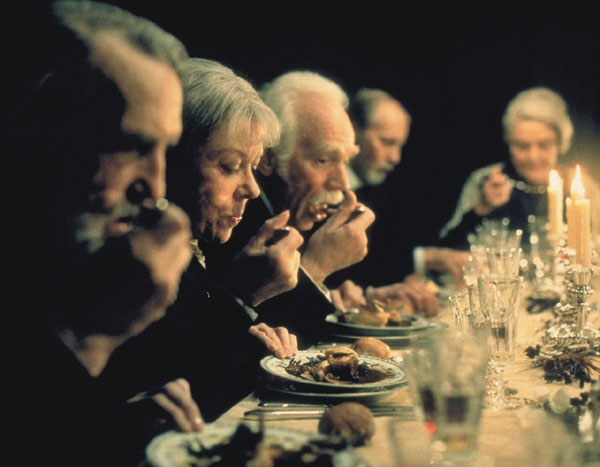
One of my favourite films is Babette’s Feast, which depicts an encounter with the numinous, in a shared meal. Within the film the character of the General describes a French cook who could transform a dinner into a love affair that made no distinction between bodily and spiritual appetite. In contrast to Chocolat, in which the piety of the townsfolk is presented as being in opposition to the liberating power of indulging in chocolate, Babette’s Feast’s message is far more profound. The message is not that of hedonism vs. mean-spiritedness, but of the danger of the spiritual and the physical, of heaven and earth, parting ways. In Babette’s Feast the meal is not solely about the sensual delights of tasty food, but is about the power of grace and forgiveness to transform the everyday and about the marriage of the physical and the spiritual (the rift between the two can also be seen in the contrast between the austere piety of the villagers and the decadent decaying world from which Babette flees).

Prior to Babette’s arrival, delight in the grace of God’s physical gifts – of food, neighbours, love, and music – was sacrificed on account of an ascetic religious commitment. However, when this piety has its eyes opened to the grace of God in his physical gifts, something profound can happen, a deeper savouring of the world than is possible for the hedonist or sensualist (‘the stars have come nearer tonight…’). All of the characters in the film feel their loss or lack of something. The world of the ascetic villagers is incomplete, but so is the rich and successful world of the general, in which he can enjoy many sensual pleasures (as he declares prior to the feast, ‘vanity of vanities, all is vanity’). Many people see the film as an attack upon puritanical attitudes, but it is far deeper than that, and also attacks the separation of the world of the hedonist from spiritual depth (a good lesson for many Chocolat fans, I suspect). The meal provides the marriage between the spiritual and the physical in which the rift between the two worlds is overcome.

I could proceed to comment on the way in which the film exposes the gift character of the cooked meal, but I will leave that as a thought for you to ponder.

Posted in The Sacraments | 6 Comments

Forgetting What We Read

Although I had rather a long break from formal blogging, I wrote a lot in various other contexts during my absence, and thought that I might as well occasionally post something that I come across in some random and neglected corner of my files, that has previously been posted on some social network, online forum, or e-mail discussion.
 

James Collins writes:

“There is a difference,” she said, “between immediate recall of facts and an ability to recall a gestalt of knowledge. We can’t retrieve the specifics, but to adapt a phrase of William James’s, there is a wraith of memory. The information you get from a book is stored in networks. We have an extraordinary capacity for storage, and much more is there than you realize. It is in some way working on you even though you aren’t thinking about it.”

Did this mean that it hadn’t been a waste of time to read all those books, even if I seemingly couldn’t remember what was in them?

“It’s there,” Wolf said. “You are the sum of it all.”

This was very encouraging, and it makes intuitive sense: we have been formed by an accretion of experiences, only a small number of which we can readily recall. You may remember the specifics of only a few conversations with your best friend, but you would never ask if talking to him or her was a waste of time. As for the arts, I can remember in detail only a tiny fraction of the music I have listened to, or the movies I have watched, or the paintings I have looked at, but it would be absurd to claim that experiencing those works had no influence on me. The same could be said of reading.

And yet we tend to read to gain and remember information, and so will naturally feel dissatisfied when we discover that we don’t. I forget most of what I read. However, many of the books that I have forgotten have profoundly shaped my character, others have left behind mental accretions of knowledge that now lack citation, some books leave strong emotional memories, still others have left little actual memory, while still somehow making their subject matter more accessible on future attempts. In general I find that the best way to remember something is to put it into one’s own words and discuss it with others.

Do you remember what you have read well? What are some of the strategies that you employ to help you?

Posted in My Reading, Quotations | 3 Comments

Summary of Edwin Friedman’s ‘A Failure of Nerve’: Part 2

Other Posts in Series: Part 1, Part 3, Part 4Part 5, Part 6

Friedman advances the thesis that contemporary America has a climate of chronic anxiety, leading to ‘an emotional regression that is toxic to well-defined leadership’ (53). He points out that ‘one does not need dictators in order to create a totalitarian (that is, totalistic) society.’

An emotionally regressed society or institution will put its technology at the service of its regression. It can become obsessed with data and technique in a manner that leaves its leaders incapable of recognizing the priority of the leader’s own self and the emotional processes of the group. While we tend to focus on the symptoms of regression (abuse, conflict, etc.), Friedman seeks to draw attention to the emotional processes that underlie them.

Chronic Anxiety

To understand these emotional processes, Friedman employs the family therapy theories of Dr Murray Bowen. Rather than trying to understand families in terms of their cultural, ethnic, or socio-economic distinctions, Bowen focused instead on the underlying processes that families share in common with all other groups or societies. From this perspective the most critical thing for any society or family is how well they are able ‘to handle the natural tension between individuality and togetherness, their ability to maintain their identity during crisis, and their capacity to produce well-differentiated leadership’ (56).

In larger societies, as in families, the ability to cope can be lost as ‘anxiety escalates as society is overwhelmed by the quantity and speed of change’ and as ‘the institutions or individuals (whether scapegoat or symptomatic) traditionally used to absorb or bind off society’s anxiety are no longer available to absorb it’ (57). In a family, physical and mental symptoms can begin to surface a few months after a destabilizing event. In a nation, the loss of a scapegoat community can lead to a crisis of anxiety, as the society loses its means of dealing with it. In such an anxiety-driven context, family life shrivels into an emotional regression. Society becomes increasingly undifferentiated, unimaginative, unwilling to undertake risk and hyper-reactive.

This chronic anxiety is to be distinguished from communal nervousness, existential angst, or the ‘anxiety’ occasioned by the economy or the threat of war. ‘Chronic anxiety might be compared to the volatile atmosphere of a room filled with gas fumes, where any sparking incident could set off a conflagration, and where people would then blame the person who struck the match rather than trying to disperse the fumes’ (58). The focus of chronic anxiety thus should not be confused with its cause.

This is one reason why those offering technical solutions to problems that families come to them with often fail to make lasting difference: address the manifestation of anxiety surrounding money, for instance, and it will merely relocate around sex, or children. The failure of quick-fix attitudes is that of neglecting to modify the emotional processes that underlie everything else. If technique is all that is required, the being of the consultant and their own emotional processes are unimportant, which is one reason why such an approach is so seductive. These same principles apply in business and society more generally: mere technical responses to a business’ problems will generally fail to address any deeper malaise in its corporate culture.

This chronic anxiety is self-reinforcing: the greater the chronic anxiety in any community, the more oriented it will become to its symptoms, and the more likely it is to export its troubles into the wider society through violence, litigiousness, or other means. The only way out of this chronic anxiety is through a stage of acutely painful withdrawal, which is why many perpetuate the withering symptoms, rather than addressing them directly.

The Five Characteristics of Chronically Anxious Societies

Chronically anxious families and societies have five key characteristics, which lead to a ‘regression’ that runs counter to the evolutionary principles that should guide society.

Reactivity

Instead of self-regulation, the regressed society is characterized by reactivity, caught in a ‘vicious cycle of intense reactions of each member to events and to one another’ (53). Such societies are bound together in a sort of ‘feeling plasma’, and each person finds their nervous system ‘constantly bombarded by the emissions of everyone else’s’ (62). In a reactive family, communication is more characterized ‘you’ statements (‘you are so pig-headed!’, ‘you are just like her!’ etc., etc. – just think of the last time you caught a family argument on a tabloid talk show while flipping channels), than by self-defining ‘I’ statements (‘this is what I believe’, ‘this is what I will do’, etc.). In the reactive family, ‘the more aggressive members are in a perpetually argumentative stance, and the more passive are in a constant state of flinch’ (63). Anxiety and emotional processes spread between parties like wildfire, as there is no differentiation: ‘highly reactive families are a panic in search of a trigger’ (the trigger frequently being provided by the children that they become fixated upon – chronically anxious families are often child-focused families).

Such a family is almost invariably characterized by the family’s inability to produce or support a leader, and by a complete loss of playfulness, as all becomes deadly earnest. Friedman sees this same reactivity within American society, where people constantly interfere with others’ self-expression, react to them on a hair-trigger, take disagreement far too seriously, and ‘brand the opposition with ad hominem personal epithets (chauvinist, ethnocentric, homophobic, and so on)’ (64). Their members lack the ability to create the distance and objectivity necessary in order to be proactive.

Herding

Closely related to the reactive tendency, the regressive society exhibits a herding tendency. It will tend to ‘reverse the direction of adaption toward strength, and it winds up organizing its existence around the least mature, the most dependent, or the most dysfunctional members of the “colony”’ (67). In such a society people are emotionally fused in an ‘undifferentiated togetherness’. In such a society, there will be a constant pressure, through threats or inducements, upon people to adapt. The alternative to this approach is not compromise and consensus, but the sort of healthy self-differentiation that will promote a greater degree of toleration for the differentiation of other persons. In the ‘homogenized togetherness’ of the regressive society, one must surrender one’s self to the family’s self to survive. The goal of much family counselling should be ‘to help people separate so that they do not have to “separate”’ (68).

An emotionally regressive family will tend to adopt an appeasement strategy with disruptive members in order to be ‘inclusive’, while sabotaging those who would stand up to them. It will bend over backwards to accommodate people who are focused on their rights, rather than responsibilities, and attack the person who seeks to take an unaccommodating and self-defined position, presenting them as cruel, selfish, or insensitive. This is so predictable that being called such names is usually a sign that you are moving in the right direction.

This herding tendency cripples the leader who seeks to be decisive, which involves being willing to give things up. The rightness or wrongness of our decisions largely depends on what we do after them. However, in the emotionally regressive society the potential leader is unlikely to be able stand firm when they make a decision, so they don’t tend to make them.

The adaptation of groups to their most demanding and dysfunctional members is visible in numerous areas of American society, and the preparedness to engage in appeasement and compromise with those to whom no ground should be given. This can particularly be seen in the activities of those who ‘tyrannize others, especially leaders, with their “sensitivity”’ (71), acting as if they were ‘helplessly violated by another person’s opinion’. Friedman remarks:

It has been my impression that at any gathering, whether it be public or private, those who are quickest to inject words like sensitivity, empathy, consensus, trust, confidentiality, and togetherness into their arguments have perverted these humanitarian words into power tools to get others to adapt to them.

Friedman draws attention to the manner in which this allows the chronically offended reactive members of a population to hijack the agenda of the whole society, as people rally to soothe them, rather than keeping them in line and stopping their invasiveness, a problem that is especially powerful in the context of identity politics.

Blame Displacement

The chronically anxious family seems to lack an immune response, and so becomes wholly focused on the outside agent, as it lacks the ability to limit its invasiveness. One aspect of this is the encouragement of blaming, rather than ‘owning it’. This is seen in the focus on ‘you’ statements mentioned earlier: such statements displace the problem by blaming the other party and generally illustrate the anxiety, helplessness, and perhaps even ‘emptiness’ of the person expressing them (76). Such families will constantly blame some internal or external party or issue rather than ‘own’ themselves and their relationships.

This blame displacement leads to a constant focus ‘on pathology rather than strength’, and an inability to harness inner strengths to address weakness. Such families fail to recognize that trauma often has less to do with the crisis or ‘impacting agent’ than it does with the emotional processes that organize the family’s life and shape its response. The mature family can grow through trauma, and broaden their repertoire of responses.

Blame displacement can be seen in such things as the anti-incumbency attitude that exists in America – the tendency to resist whoever holds office. It is ‘a reactive response to the voter’s own inner emptiness, personal frustration, general unhappiness, loss of hope, and feelings of helplessness’ (79-80). It is also seen in the revisionist histories that rejoice to tear down the heroes of yesteryear.

Friedman questions the idea that it requires two persons working on a marriage to change it. In a marriage, a shift can occur and divorce can be avoided as one partner recognizes how their reactivity has compounded problems, stops shifting the blame, and takes responsibility for their responses. It is important to shift the criterion of counselling from ‘who has/is the problem?’ to ‘who has the motivation to focus on strength, not weakness, and on leadership, not pathology?’ (81).

The Quick-Fix Mentality

The chronically anxious family is impatient and puts its trust in technique over maturity, believing that its problems can be solved in a linear fashion. They have a low threshold for pain, arising from their lack of motivation to get on with life, a low threshold that drives them into the arms of people offering quick fixes. To the extent that we are motivated, our threshold for pain increases. This is important for dealing with others: ‘raising our own threshold for the pain another is experiencing can often motivate the other to take more responsibility for his or her life’ (85). Increased sensitivity to the feelings of others is not the solution that it is commonly presented to be. If our threshold for other people’s pain is too low, we can cause their threshold for it to lower as well (counsellors’ low threshold for the pain of couples can increase the possibility of their marriages failing).

Chronically anxious families almost invariably lack a leader who won’t give into their demands. When such a leader arises, they will be unstinting in undercutting the leader’s resolve. People can seldom become more mature than their leaders or mentors.

The obsession with technique and method is an aspect of our addiction to the quick-fix. This obsession has the tendency to transform professionals into hacks.

Poorly Defined Leadership

All of the characteristics of the chronically anxious family already mentioned lead to create the poorly defined leader. The poorly defined leader is led around by crisis, lacks the distance to gain clear vision, and is reluctant to take a clear stand. In the chronically anxious society, the leaders chosen will tend to be immature, without the capacity to resist sabotage, reactivity, and dysfunction.

Friedman remarks that, the ‘single most important factor’ that he has noticed in his extensive experience distinguishing families that recover from crisis from those that don’t was the presence of a well-defined leader. By ‘leader’ he doesn’t refer to someone who dictates to others, but to ‘someone who can maintain the kind of non-anxious, well-principled presence’ that he has described (89).

What is always absent from chronically anxious, regressed families is a member who can get himself or herself outside of its reactive, herding, blaming, quick-fix processes sufficiently to take stands. It has to be someone who is not so much in need of approval that being called “cruel,” “cold,” “unfeeling,” “uncooperative,” “insensitive,” “selfish,” “strong-willed,” or “hard-headed” immediately subverts their individuality.

Comments

There are many things that I would love to explore in more depth here. The relationship between the regressive society and the operation of Girardian mimetic desire and the scapegoat mechanism is definitely worth some closer attention. The same themes crop up: the scapegoat, a lack of differentiation, hyperconductivity of tension/anxiety, etc. Friedman is showing just how tightly these Girardian themes are bound into the lives of families and societies and the means by which to overcome them (a point where Girard doesn’t always paint the clearest picture).

His points about the chronically anxious and emotionally regressive character of discourse in society, and the manner in which society adapts to the most dysfunctional, pathological, and disruptive members of society raise troubling questions for liberals, given the degree to which liberal and identity politics so often exhibits or encourages the herding and blame displacement characteristics, shutting down challenge, engaging in ad hominem, and tyrannizing with sensitivities. Conversely, I believe that liberals have important questions to ask of Friedman. For instance, isn’t Friedman’s approach at risk of being blind to real questions of social justice and lack of empowerment? Also the degree to which we have the capacity to be responsible and self-defined owes a lot to forces outside of ourselves. We are not born as self-defined individuals, but become them as an achievement (and in many respects as a social more than as a personal achievement), one which can owe much to social factors such as education, personal space, home environment, economic independence, etc.

Finally, I think that several of the observations about regressive societies could be applied to various Christian contexts and churches, for instance. Many churches exhibit an undifferentiated togetherness, which provides a hyperconductive context for anxiety and a hyperreactive posture. The emotional process of anxiety can be traced in the evangelical obsession with the spiritual quick fix, the obsession with theological certitude, etc.

I would be interested to hear any further thoughts that people might have in the comments.

Posted in My Reading, Reviews | 21 Comments

Why There Are No Theological Problems

Jacques Maritain somewhere makes a distinction that I find helpful between a ‘problem’ and a ‘mystery’. A problem admits of a solution – ‘can you prove Fermat’s last theorem?’ ‘is there intelligent life elsewhere in the universe?’ ‘does the Higgs boson exist, and if so, at what mass?’ – even if we don’t currently know the solution, it makes sense to look for a final answer which will lay the question to rest. A mystery, by contrast, can never be solved, only clarified; ‘what is beauty?’ might be a mystery: there is in principle no final answer, only a series of explorations (proportion; harmony; the sublime; …) which help us to think more clearly about the issue.

I propose (with no claim to originality) that the interesting questions in theology are all mysteries: we shouldn’t expect answers, so much as hints and definitions that serve to clarify our thoughts about the question.

Read the whole post here.

Posted in The Blogosphere, Theological | 2 Comments

Summary of Edwin Friedman’s ‘A Failure of Nerve’: Part 1

Other Posts in Series: Part 2Part 3, Part 4Part 5, Part 6

I am presently reading Edwin H. Friedman’s A Failure of Nerve: Leadership in the Age of the Quick Fix, a provocative, stimulating, and eminently quotable book which challenges much popular wisdom along the way. I thought that I would share some of his insight with you all in a few posts, in which I articulate the core of his position, punctuating my summary with some of his pithy quotations.

Friedman’s book concerns itself with the crisis of leadership in America civilization, which he characterizes as a ‘failure of nerve’. This crisis of leadership is found throughout American civilization, in national, state, and local politics, in the legal system, in schools, businesses, and in families, which receive particularly close attention.

This crisis is exacerbated by many of the ways in which we seek to tackle our social problems. For instance, data is valued over maturity, technique over stamina, and empathy over personal responsibility. In Friedman’s understanding, the leadership crisis arises from a conceptual and emotional dimensions hindering progress and encouraging ‘regression’.

Where many focus on the ‘social science construction of reality’ in their understanding of such issues, focusing on the personalities and psychologies of individuals, or on their sociological and anthropological ‘niche’ (gender, race, ethnicity, income, class, etc.), Friedman sees this approach as tending to contribute to, rather than alleviate our problems. For Friedman the crucial issues are things that all groups and their members share in common, in particular the tension between the ‘forces for self and togetherness; the reciprocal, adaptive, compensatory functioning by the partners to any relationship; and the evolutionary consequences of self-differentiation for both that individual and other members of his or her community’ (4).

Friedman’s belief that universal emotional processes are the key to understanding leadership arises from his extensive experience with a broad range of different forms of leadership, communities, and relationships in different contexts, in families, religious and educational institutions, business, politics, etc.

Friedman attacks the manner in which organizations primarily adapt themselves to their most dependent, recalcitrant, and anxious members, rather than to ‘the energetic, the visionary, the imaginative, and the motivated’ (12). He argues that the devaluation of the important of self-differentiation as the key to leadership is the origin of many of our problems in the area, causing leaders to depend more upon their ‘expertise’ than on their capacity to be decisive. More technique and data won’t solve problems that arise from embedded emotional processes. A failure to understand the manner in which these processes operate causes us to believe that they can be resolved or regulated ‘through reasonableness, love, insight, role-modeling, inculcation of values, and striving for consensus.’

In Friedman’s extensive experience, the crucial factor that distinguished families that flourished through crisis and those who failed was the presence of a ‘well-differentiated leader’. Friedman seeks to show that strength lies in ‘presence’ rather than ‘method’, ‘to enable leaders to avoid trying to instill insight into the unmotivated’, show the unhelpfulness of leadership concepts such as ‘role-modeling’, ‘emulation’, and ‘identification’, and how self-differentiation ‘can make the dependency of the unimaginative and the recalcitrant work for instead of against them’ (26).

Imaginative Gridlock

The first chapter of A Failure of Nerve presents the case of Europe at the end of the 15th century as an example of a society that was emotional regressed and struck in imaginative gridlock. However, the next half century witnessed a complete transformation, and a virtually unprecedented degree of change and progress, not a mere continuation of existing processes, but a quantum leap, or ‘punctuated equilibrium’. While many attribute this cultural rebirth to a renewed interest in learning, Friedman questions this, arguing that it was primarily a shift in emotional rather than cognitive processes that gave rise to the transformation: ‘Imagination and indeed even curiosity are at root emotional, not cognitive, phenomena’ (31). Friedman believes that it was the discovery of the New World, rather than learning, that awakened Europe’s inventiveness and threw open its imaginative horizons.

Using this transformation of European culture as an allegory, Friedman aims to show that

Any renaissance, anywhere, whether in a marriage or a business, depends primarily not only on new data and techniques, but on the capacity of leaders to separate themselves from the surrounding emotional climate so that they can break through the barriers that are keeping everyone from “going the other way.” (33)

The imaginatively gridlocked system will be characterized by a continual treadmill of trying harder, ‘driven by the assumption that failure is due to the fact that one did not try hard enough, use the right technique, or get enough information’ (35). This overlooks the possibility that ‘thinking processes themselves are stuck and imagination gridlocked, not because of cognitive strictures in the minds of those trying to solve a problem, but because of emotional processes within the wider relationship system.’ This is illustrated by Europe’s fixation on finding routes to the East (to the extent that the large land mass of America was perceived by many to be ‘in the way’), and its failure to see the great possibilities that were open to it on account of this treadmill.

The imaginatively gridlocked system is also characterized by a ‘continual search for new answers to old questions rather than an effort to reframe the questions themselves’ (37). ‘Innovations are new answers to old questions; paradigm shifts reframe the question, change the information that is important, and generally eliminate previous dichotomies.’ The concern to find the right answer to an unquestioned question results from and contributes to a fixed orientation and keeps one on the treadmill. For pre-1500 Europe, this can be illustrated by the ‘locked-horns’ relationship with the Moors that prevented Europe from realizing ‘that by going in the opposite direction, it had found more than it was looking for’ (39).

The third key characteristic of the imaginatively gridlocked system is ‘either/or, black-or-white, all-or-nothing ways of thinking’. Friedman maintains that ‘such intense polarizations also are always symptomatic of underlying emotional processes rather than of the subject matter of the polarizing issue.’ The capacity of differences to polarize owes more to the emotional processes operative in a context than to the differences themselves. This ‘either/or’ way of thinking led to a European debate over whether it was 3000 or 10000 miles from Europe to Japan. The third possibility – that there was another piece of land in between – was missed by many, less on account of ignorance than on account of the emotional processes that sustain such polarized thinking (40).

Friedman draws attention to the manner in which explorers of this era of Europe’s history broke ‘emotional barriers’, barriers that had locked people into certain ways of imagining, thinking, and acting. The relationship between risk and reality is crucial to the reorientation process. He highlights ‘three facets of the discovery process’. First, when the quest is an ‘open-ended search’ for novelty and adventure, rather than certainty and ‘a driven pursuit of truth’, mistakes cease to be such a problem. Second, there is a valuing, rather than a fear of chance and serendipity. The uncertain and unexpected is to be welcomed. Finally, there is a will to overcome emotional and imaginative barriers – beliefs ‘born of mythology and kept in place by anxiety’, which exert a primarily dissuasive force. The equator was one such barrier for 15th century Europeans.

Friedman identifies three emotional barriers that prevent true leadership in our own day: 1. the belief that data is more important to leadership than the capacity to be decisive; 2. the belief that empathy for others will make them more responsible; 3. the belief ‘that selfishness is a greater danger to a community than the loss of integrity that comes from having no self’ (49).

The Goal of the Work

Friedman concludes by sketching the reorientation that he wishes to accomplish in our thinking through his book (50).

  • Imagination is emotional, rather than cerebral
  • Anxiety is between people, rather than in the mind
  • The capacity to be decisive is more important than being as informed as possible
  • We should foster ‘responsibility for one’s own being and destiny’ over feelings, sensitivity, and rights
  • Rather than being a selfishness that destroys community, a leader’s well-defined self is essential to the integrity of the community
  • Reality is about relationship, rather than the nature of things and we should focus on differentiating self, rather than motivating others
  • Stress results from one’s position in relational triangles, rather than hard work
  • Crisis and sabotage can be signs of success
  • The past resides in the present and isn’t merely a prelude to it

Friedman’s position is provocative and daring. It will ruffle the feathers of many, perhaps especially on the left of the political spectrum. It raises a number of questions, some of which Friedman addresses at later points in the book. Already one might be wondering, for instance, to what extent Friedman’s approach might commit him to a ‘Great Man theory’ of history, and might have questions about the history that underlies his extended allegory, and whether Friedman is in part projecting what he claims to find there. Several further questions will arise as we proceed. Nevertheless, I believe that the frequently profoundly insightful and challenging nature of Friedman’s approach makes it worthy of attention and interaction, perhaps even if we demur on a number of the key aspects of his thesis.

Posted in My Reading, Reviews | 13 Comments

Matt Colvin on Missionary Support

Matt Colvin blogs on the subject of missionary support:

One of the goals of giving a handout to a bum is to avoid entering into any deeper relationship with the beggar: toss him some money and walk on. By contrast, if you are supporting a missionary, you should see it as something that binds you together with other members of the body of Christ. You as a donor should ask, “Do I want to partner with this missionary? Is he the sort of person whom I want to represent me to the Philippines (or France or Haiti or India or…)? Will we, together, be doing the Lord’s work?” And if the answer is, “Yes,” then neither he who asks nor he who gives has any need to be embarrassed. The Lord loveth a cheerful giver, and a donors who are in a sending relationship with a missionary delight to hear when there is “an opportunity”.

The whole post is well worth a read.

Matt, his wife, and family are preparing to go as missionaries to the Philippines. If you would like to know more about their support situation, read this.

Posted in On the web, The Blogosphere | 1 Comment

Tebow’s Faith and Ours

A friend just alerted me to Daniel Foster’s thought-provoking article on Tim Tebow. I am sure that a number of you will have read it before, and will be familiar with (and perhaps exhausted by) the discussion surrounding Tebow’s faith and his public expression of it. However, the article makes a very good point, and one which I think worthy of closer examination and elaboration.

Foster claims that at the root of the criticism and annoyance at Tebow’s open demonstration of his faith:

has to do with the curious double standard that seems to be in place when it comes to an athlete’s religiosity. With very few exceptions … athletes’ professions of faith strike most believers, nonbelievers, and agnostics alike as empty ritual, an extended solipsism in which big men with bigger egos congratulate themselves for having God on their side. How could it be otherwise? We see that in fact so many of them are supremely arrogant — materialists, abusers, and lechers. We’ve become cynical and secular enough as a society that this dissonance doesn’t bother most people. The hypocrisy is actually sort of comforting, a confirmation that that old hokum in the Bible has no bearing on the world as it actually is. It’s the same sort of glee you see from some when Christian politicians and ministers are felled by all-too-human moral — especially sexual — foibles.

By contrast, Tebow is the last Boy Scout. A leader on the field and off who spent his college years not indulging in any of the worldly pleasures afforded to Heisman Trophy winners, but doing missionary work in Thailand; helping overworked doctors perform circumcisions in the Philippines (you read that right); and preaching at schools, churches, and even prisons. This is a young man with such a strong work ethic that, according to teammates, he can’t even be coaxed into hitting the town on a night after a Broncos win, because he is too busy preparing for the next week’s game. This is a young man who even turned the other cheek at Stephen Tulloch’s Tebowing, saying, “He was probably just having fun and was excited he made a good play and had a sack. And good for him.”

That’s way too much earnestness for the ironic. It’s way too much idealism for the cynical. And it’s way too much selflessness for the self-absorbed. In short, people aren’t upset at Tebow’s God talk. They’re upset that he might actually believe it.

As Slavoj Žižek observes, in the contemporary West, fundamentalists – people who genuinely believe, fully and without reservation – are the barbarians.

And, perhaps, the prohibition to embrace a belief with a full passion explains why, today, “culture” is emerging as the central life-world category. Religion is permitted — not as a substantial way of life, but as a particular “culture” or, rather, life-style phenomenon: what legitimizes it is not its immanent truth-claim but the way it allows us to express out innermost feelings and attitudes. We no longer “really believe,” we just follow (some of the) religious rituals and mores as part of the respect for the “life-style” of the community to which we belong (recall the proverbial non-believing Jew who obeys kosher rules “out of respect for tradition”). “I do not really believe in it, it is just part of my culture” effectively seems to be the predominant mode of the disavowed/displaced belief characteristic of our times: what is a “cultural life-style” if not the fact that, although we do not believe in Santa Claus, there is a Christmas tree in every house and even in public places every December? Perhaps, then, “culture” is the name for all those things we practice without really believing in them, without “taking them seriously.” Is this not also the reason why science is not part of this notion of culture — it is all too real? And is this also not why we dismiss fundamentalist believers as “barbarians,” as anti-cultural, as a threat to culture — they dare to take seriously their beliefs? Today, we ultimately perceive as a threat to culture those who immediately live their culture, those who lack a distance towards it.

Such an attitude is especially characteristic of our generation. We wish to retain a distance from our beliefs (although, as Žižek remarks, science gets a pass on this front), not taking them seriously enough to see them as making powerful claims upon ourselves and – heaven forfend! – upon others. We hold them, but we must not allow them to hold us.

Such an attitude is also widely present among Christians. We can feel profoundly uneasy about someone who does not maintain a sufficient detachment from the faith, and takes it too seriously. For instance, when a benighted fundamentalist Christian speaks about ‘the lost’, which characterizes others contrary to their preferred self-descriptions, imposing an identity upon them and recognizing the demands of an unacknowledged objective and un-privatized truth over them, many professing Christians will wince at the gall and the insensitivity.

In order to feel secure, justified, and self-assured in our unbelief, we view all others with a cynical and critical gaze, with the jaundiced eye that colours all it sees. The fundamentalist ‘true believers’ are merely ignorant, players of power games, or hypocrites. The transparent and genuine faith of someone like Tebow offends us precisely because it exposes the degree to which our own lives are characterized by a profound detachment and self-protective distance from anything that might demand our ultimate loyalty, service, and love. It cuts through our rationalizations and exposes the lie that grounds them. I am including myself throughout, because this is a sin that I recognize in myself: I have been powerfully shaped by a sort of theological training that often celebrates and cultivates exactly such a detachment and distance from faith.

Far too much contemporary cutting edge Christian thought is merely concerned with the sophisticated rationalization of unbelief for a theologically elitist crowd who believe that their cultured distance from faith makes them closer to God. We celebrate a faith that has shrunk in the wash, cloaking our unbelief with tortured exegesis or by ‘cutting a scandalizing God down to the size of our believing.’ Rather than lamenting our unbelief, we can re-characterize it as a more profound form of faith.

In such a context, our entire confession of faith can operate as if it were between ‘air quotes’, attenuated by countless qualifications and reservations, and most powerfully by our cultivated distance. While it is still confessed, we need to beware of taking it too seriously. Such an attitude can pervade many contexts, even where very good things are said in principle. Our cynicism, disillusion, and indifference make it difficult for us to throw ourselves unreservedly into believing anything, being moved by anything, or surrendering ourselves to any truth.

My generation reacts against the (often only supposed) hypocrisy of their parents. However, rather than responding with transparent, undivided, and wholehearted devotion to truth, we do it by removing the precondition of hypocrisy’s possibility. Where a distance to and detachment from truth is presented as the norm, both unbelief and hypocrisy cease to mean much. If truth doesn’t exert strong claims upon our lives and world, we will feel considerably less pressure to cloak our unbelief and practical rejection of it. Unbelief and hypocrisy are only really sins to which those who live in a world that demands full involvement are vulnerable.

It seems to me that a change has occurred in the attitudes of many. Whereas once the moral failure of a professed Christian may have been met with a greater degree of sorrow, a contemporary response is more likely to be one of schadenfreude, even to some extent from other Christians. The early response was occasioned by a desire to uphold belief in the possibility of wholehearted sincerity: the contemporary response is occasioned by a desire to uphold belief in the impossibility or inadvisability of believing anything too strongly, or of holding to a moral standard that makes clear and unambiguous demands of you and others. I suspect that this desire to justify our cynical detachment, distance, and non-involvement, is also visible in the contemporary delight in revisionist history that reveals all of the failures of our parents’ heroes, and our instant distrust of all politicians and leaders (of which more in a post tomorrow).

Within our context, we may speak of a desire for engaging with the ‘other’, but as Žižek recognizes, by this we refer to an ‘other’ evacuated of his otherness.

There are two topics which determine today’s liberal tolerant attitude towards Others: the respect of Otherness, openness towards it, AND the obsessive fear of harassment — in short, the Other is OK insofar as its presence is not intrusive, insofar as the Other is not really Other… This is what is more and more emerging as the central “human right” in late-capitalist society: the right not to be harassed, i.e., to be kept at a safe distance from the others.

We speak of ‘community’, but we really want is not the messy, uncomfortable, and invasive reality of belonging to one another, but the ersatz community created in a temporary feeling of togetherness. Perhaps the greatest lie of all is found in our claim that we want ‘authenticity’, when what we really want is a simulated, decaffeinated authenticity, something that looks like the real thing, but which is altogether more comfortable and less demanding.

In other ways, our language has been thoroughly infected by our posture of distance. This infection perverts our speech so that even our speech about faith becomes a means of unbelief, creating a poisonous atmosphere in which nothing gets taken too seriously, and we slowly inure ourselves to the claims of Christ, inoculating ourselves against genuine faith, by injecting ourselves with a weakened dose. This is why I love my faithful fundamentalist friends: they force me to be far more critical of my own tendency to rationalize my unbelief and uphold anything less than a faith that ‘demands my soul, my life, my all’.

Lord, I believe; help thou mine unbelief!

Posted in In the News, On the web | 5 Comments